



; ?>/theme/images/logo.svg)

In today’s competitive landscape, effective decision-making distinguishes high-growth enterprises from the rest. Organizations generate vast volumes of data daily, yet only a fraction of that data translates into strategic insight or business impact. Artificial Intelligence (AI) is reshaping this reality — transforming data into actionable intelligence and enabling businesses to make faster, more informed decisions with measurable outcomes.
This article explores how AI drives enterprise decision-making, the core workflows it supports, key use cases, organizational readiness considerations, and how companies can harness AI responsibly for strategic advantage.
Why AI Matters for Enterprise Decisions
At its core, decision-making in business involves choosing between alternatives under uncertainty — whether that’s launching a new product, entering a market, allocating budget, or responding to regulatory change. Traditional decision processes often rely on intuition and fragmented reporting systems.
AI changes this paradigm by:
Processing large, complex datasets that humans cannot analyze efficiently.
Identifying patterns and relationships beyond human visibility.
Providing predictive and prescriptive recommendations in real time.
Supporting scenario simulations for “what-if” analysis at enterprise scale.
In other words, AI turns raw data into decision intelligence — where insights, forecasts, and actions derive from data, algorithms, and business context rather than intuition alone.
AI Decision-Making Workflows
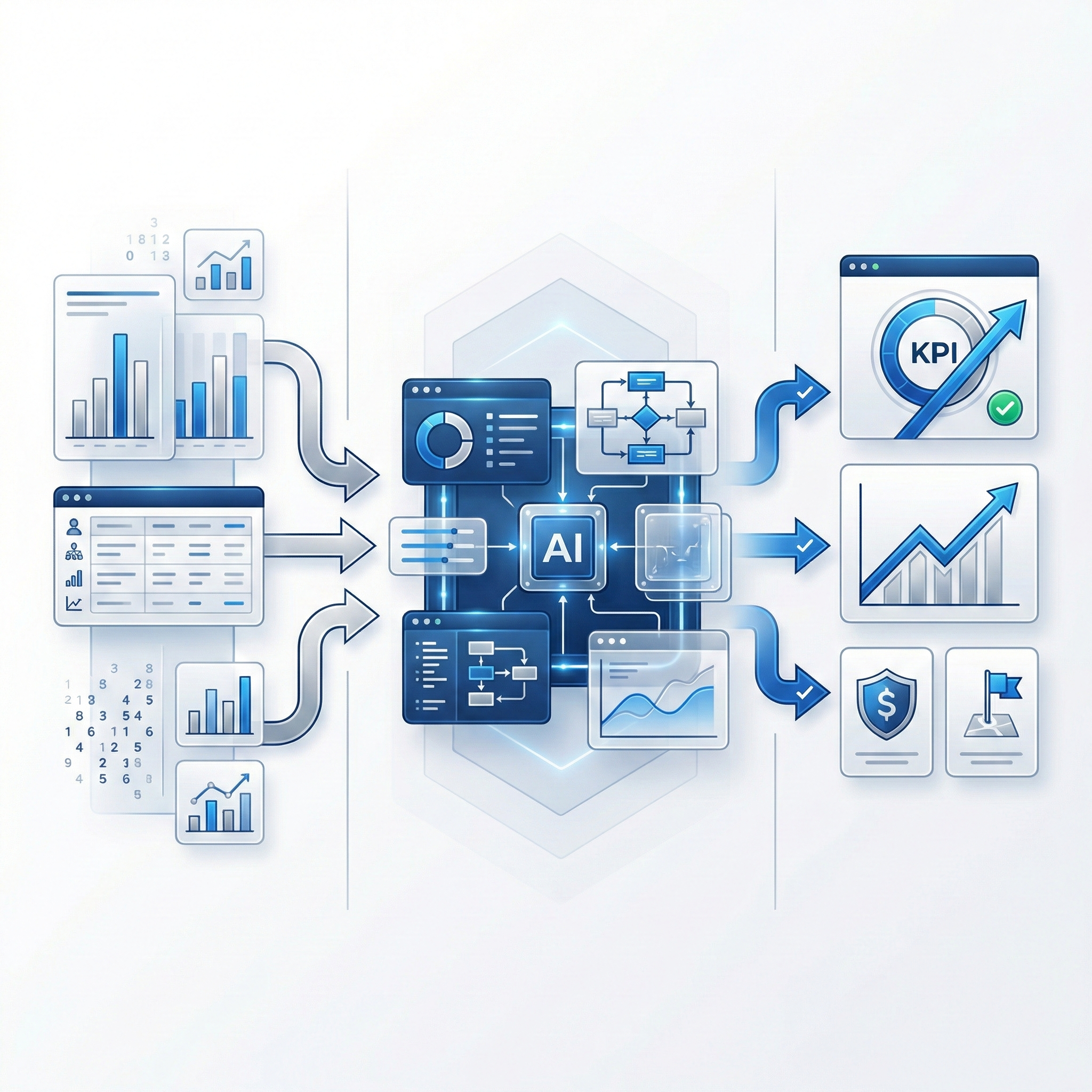
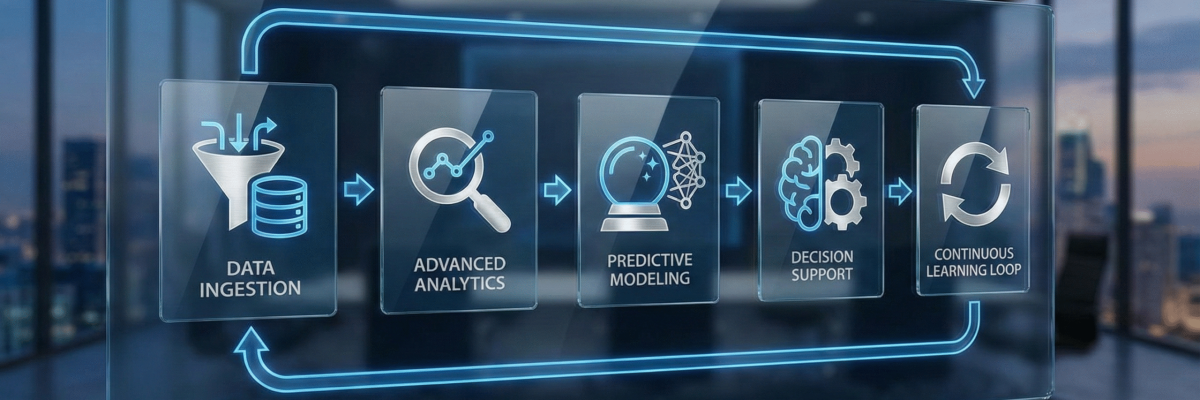
Enterprise AI decision workflows typically follow a structured cycle that integrates data, analytics, and business context:
1. Data Collection & Integration
AI systems aggregate data from internal systems (ERP, CRM, finance) and external sources (market trends, supply chain signals). Quality and relevance at this stage are critical — poor data undermines outcomes.
2. Analytics & Pattern Recognition
Machine Learning (ML) models and advanced analytics process this data, identifying patterns, anomalies, and correlations that offer predictive insights. These analytics go beyond descriptive reporting into forecasting and risk detection.
3. Scenario Modeling & Predictions
AI can simulate alternative business decisions — helping leaders understand potential outcomes before committing to action. This capability is especially valuable in strategic planning and risk mitigation.
4. Actionable Insights & Decision Support
Insights are presented via dashboards, alerts, or natural language interfaces, enabling leaders to make data-backed decisions with clarity and confidence.
5. Monitoring & Continuous Learning
AI systems monitor outcomes and refine models over time through feedback loops — enabling adaptive learning and incremental improvement.
This structured approach turns decision-making into a repeatable, measurable process rather than a subjective exercise.
Key AI Capabilities in Decision Support
Predictive Analytics
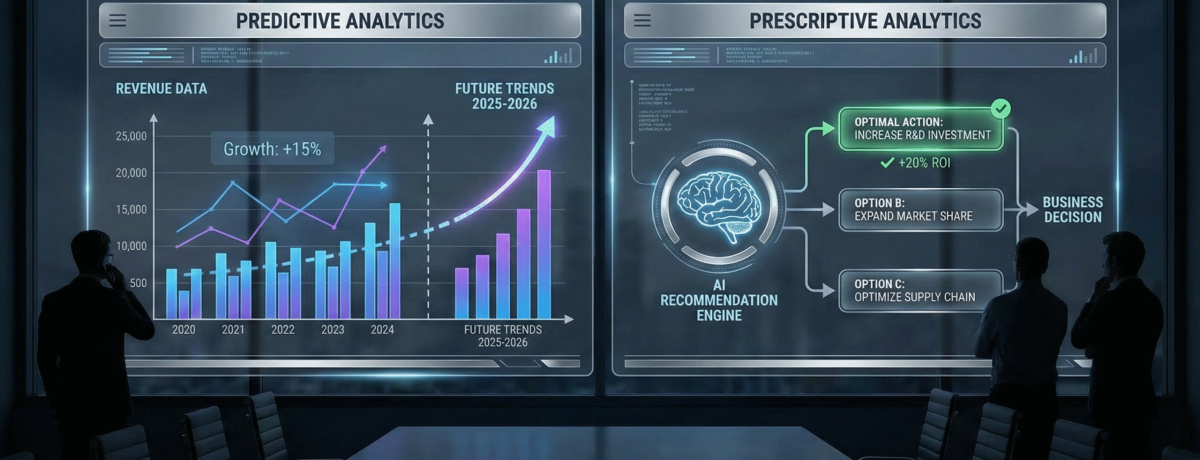
Predictive models analyze historical data to forecast future events — from customer churn to market demand — enabling proactive decisions.
Prescriptive Recommendations
AI goes further than prediction: it suggests optimal actions given business constraints and objectives. These recommendations can guide investments, pricing decisions, and resource allocation.
Real-Time Decision Support
AI can analyze streaming data and flag opportunities or risks in real time. Operational intelligence systems deliver insights that support immediate action.
Natural Language Decision Interfaces
Next-generation AI systems let business users query data conversationally — reducing dependency on technical intermediaries and accelerating insight discovery.
Enterprise Use Cases That Unlock Strategic Value
Enterprises applying AI to decision-making realize value across core functions:
Strategic Planning and Forecasting
AI helps companies project future trends and stress-test strategies under varying scenarios — improving confidence in boardroom decisions.
Marketing and Customer Decisions
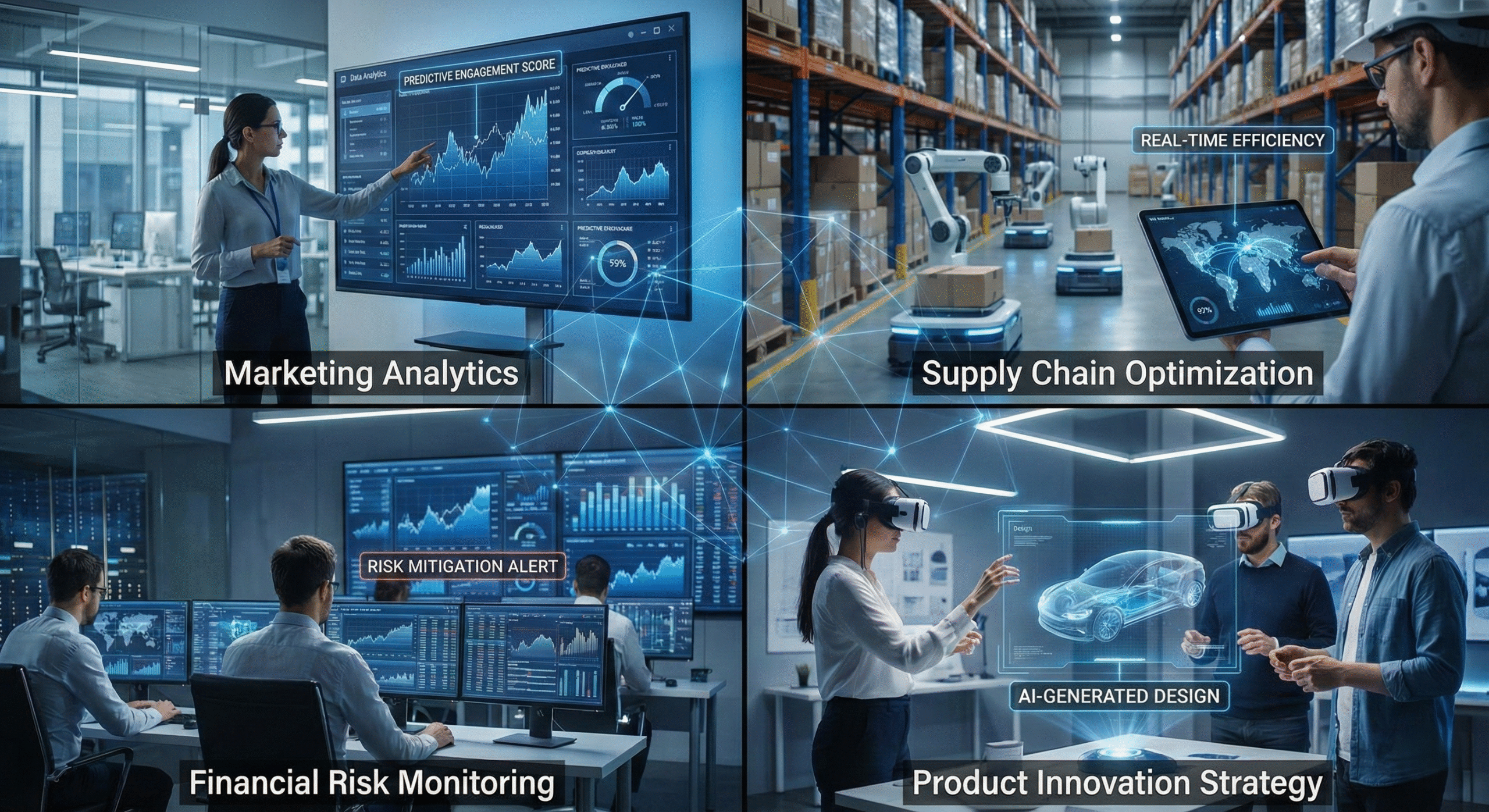
AI identifies customer segments, predicts purchase behavior, and optimizes marketing spend — driving higher ROI on customer acquisition.
Supply Chain & Operations
Predictive analytics forecast demand, optimize inventory, and reduce disruptions — enabling more resilient operations.
Risk & Compliance
AI detects anomalies and compliance issues in financial and operational data, enabling proactive risk mitigation.
Product & Innovation Strategy
Simulating product scenarios with AI supports decisions on feature prioritization, pricing, and roadmap investments.
Human-AI Collaboration: The Winning Formula
AI rarely replaces human decision-making outright. Instead, the most effective enterprises combine machine insights with human strategic judgment.
AI brings speed, accuracy, and pattern recognition to the table, while human leaders contribute creativity, domain expertise, and ethical oversight. This hybrid approach ensures that AI augments — rather than dictates — strategic decisions.
Challenges and Organizational Readiness
While the technical potential of AI is real, many enterprises lag in deriving measurable value. Recent industry reports indicate that a significant portion of companies have yet to see tangible benefits from AI deployments due to unclear strategies and organizational barriers.
Common obstacles include:
Data quality and governance gaps
Lack of AI fluency among teams
Resistance to change in existing workflows
Insufficient integration with core business systems
Overcoming these challenges requires clear leadership vision, strategic investment in data infrastructure, and a culture that embraces continuous learning.
Measuring Strategic Impact
To ensure AI drives strategic value, enterprises should monitor outcomes such as:
Improvement in forecast accuracy
Reduction in decision latency
Quantifiable increases to revenue or cost avoidance
Employee productivity gains
Feedback loops — where decision outcomes inform future models — help refine the AI decision engine and sharpen competitive advantage over time.
Conclusion
AI is redefining business decision-making by converting data into strategic advantage. It enables enterprises to think and act with intelligence, speed, and foresight — essential attributes in a world of complex, data-rich markets. But realizing this potential requires more than technology alone: it demands thoughtful integration, robust governance, and a collaborative relationship between AI systems and human decision-makers.
Enterprises that embrace AI as a decision intelligence partner — rather than a tactical gadget — will be best positioned to outperform competitors, respond to disruption, and drive sustainable growth.